
Kilimanjaro National Park

Kilimanjaro National Park
 Kilimanjaro National Park • Image 2
 Kilimanjaro National Park • Image 3
 Kilimanjaro National Park • Image 4
Kilimanjaro International Airport (JRO)
Tanzania
Very different by altitude, from warm at the gate to well below freezing at the top
Year-round travel
Black and white colobus monkeys and blue monkeys in the forest
3 key species listed
6 to 8 Nights (Climbing)
Tailored itinerary
January to March and June to October are the driest and clearest climbing months
High & Green seasons
About Kilimanjaro National Park & Destination Guide
Kilimanjaro National Park protects Mount Kilimanjaro, the highest mountain in Africa at 5,895 metres, and its summit is Uhuru Peak. It suits fit walkers who want a big challenge without technical climbing, and it is one of the world's most popular treks.
A climb takes about 6 to 9 days depending on the route, with a licensed guide, cooks and porters carrying the gear. You walk through rain forest, moorland, alpine desert and finally the snow and rock of the top. Summit day starts at night and is long and cold.
The honest trade-off is altitude. Many climbers get headaches or altitude sickness, and a longer route gives your body more time to adjust, so it improves your chance of reaching the top. The summit success rate is not a promise. You also need a licensed guide, a park permit, good boots and warm layers.
Many guests climb Kilimanjaro and then fly to Zanzibar to rest their legs on the beach (direct flights take about 1 hour 10 minutes). We plan the route, the dates and the beach days together.
Getting Here, Transport & Climate
Kilimanjaro International Airport (JRO) is about an hour from the park gates. Arusha and Moshi are the usual base towns. Climbs start from the gate of your chosen route. See the Kilimanjaro climbing routes and the Zanzibar extension guide.
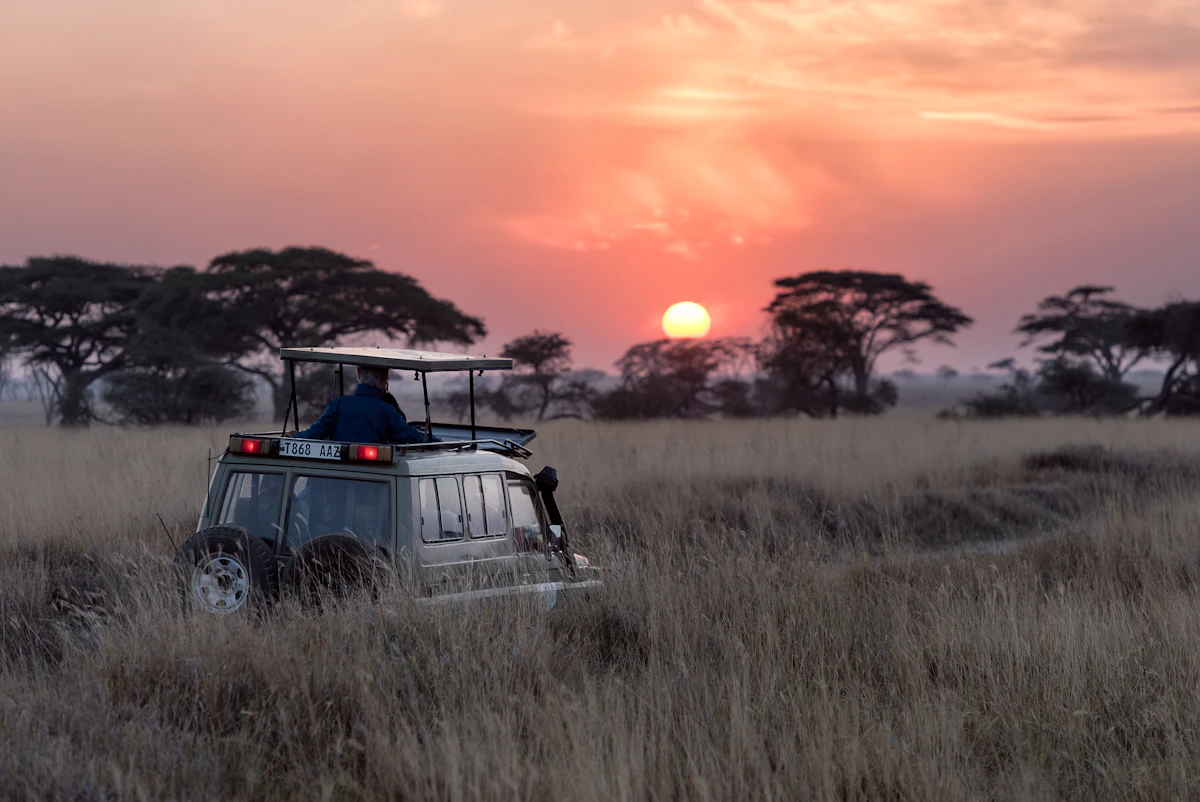
Overland travel in customized Toyota Land Cruisers featuring pop-up roofs for 360° wildlife viewing, USB charging sockets, high-clearance suspension, and a cooler with chilled bottled water.
exploreKilimanjaro National Park Interactive Map & Terrain
Explore the geographic coordinates, boundaries, local airstrips, and surrounding wilderness circuits of Kilimanjaro National Park.
Weather, Climate & Seasonal Advice
January to March and June to October are the driest and clearest climbing months. April and May are the wettest. November is often wet too. Pick your route by how many days you can allow for acclimatization.
Very different by altitude, from warm at the gate to well below freezing at the top. Nights are cold and the summit can have snow and strong wind. The best weather is the dry seasons, and the long rains from March to May are the wettest and coldest.
Highlights & Wildlife in Kilimanjaro National Park
petsKey Wildlife & Marine Species
Signature Highlights
Uhuru Peak, 5,895 metres: the highest point in Africa
Six main routes, including Machame, Lemosho, Rongai, Marangu and Umbwe
Five climate zones from rain forest to the snow cap
Shira Plateau and Barranco Wall (on some routes)
UNESCO World Heritage Site
Sunrise from the summit
Activities & Things to Do in Kilimanjaro National Park
Kilimanjaro Forest Zone Walk
You walk slowly through the rain forest on the lower slopes of Kilimanjaro with a guide, watching for blue monkeys, colobus monkeys and forest birds. This is a day walk in the forest zone, not a climb toward the summit. A picnic lunch is part of the day. The forest is cool and damp, and paths can be muddy and slippery after rain. Wear sturdy shoes and bring a rain jacket. Walking inside the park needs a ranger and a permit.
Featured Safaris & Tours in Kilimanjaro National Park
Explore our custom travel itineraries for Kilimanjaro National Park
Request Custom ItineraryFrequently asked questions
What is the best time to visit Kilimanjaro National Park?
expand_more
January to March and June to October are the driest and clearest climbing months. April and May are the wettest. November is often wet too. Pick your route by how many days you can allow for acclimatization.
How do I get to Kilimanjaro National Park?
expand_more
Kilimanjaro International Airport (JRO) is about an hour from the park gates. Arusha and Moshi are the usual base towns. Climbs start from the gate of your chosen route. See the Kilimanjaro climbing routes and the Zanzibar extension guide.
What is the weather like in Kilimanjaro National Park?
expand_more
Very different by altitude, from warm at the gate to well below freezing at the top. Nights are cold and the summit can have snow and strong wind. The best weather is the dry seasons, and the long rains from March to May are the wettest and coldest.
What can I see and do in Kilimanjaro National Park?
expand_more
• Uhuru Peak, 5,895 metres: the highest point in Africa • Six main routes, including Machame, Lemosho, Rongai, Marangu and Umbwe • Five climate zones from rain forest to the snow cap • Shira Plateau and Barranco Wall (on some routes) • UNESCO World Heritage Site • Sunrise from the summit
What should I pack for Kilimanjaro National Park?
expand_more
Layered clothing: a thermal base layer, a fleece, a waterproof and windproof jacket, broken-in hiking boots, warm gloves, a warm hat and sunglasses for cold nights and early starts.