
Practical Travel Tips
Where Is Zanzibar? Is It a Country, and How Does It Relate to Tanzania?
Written by Maria Majaaliwa Thomas · Updated
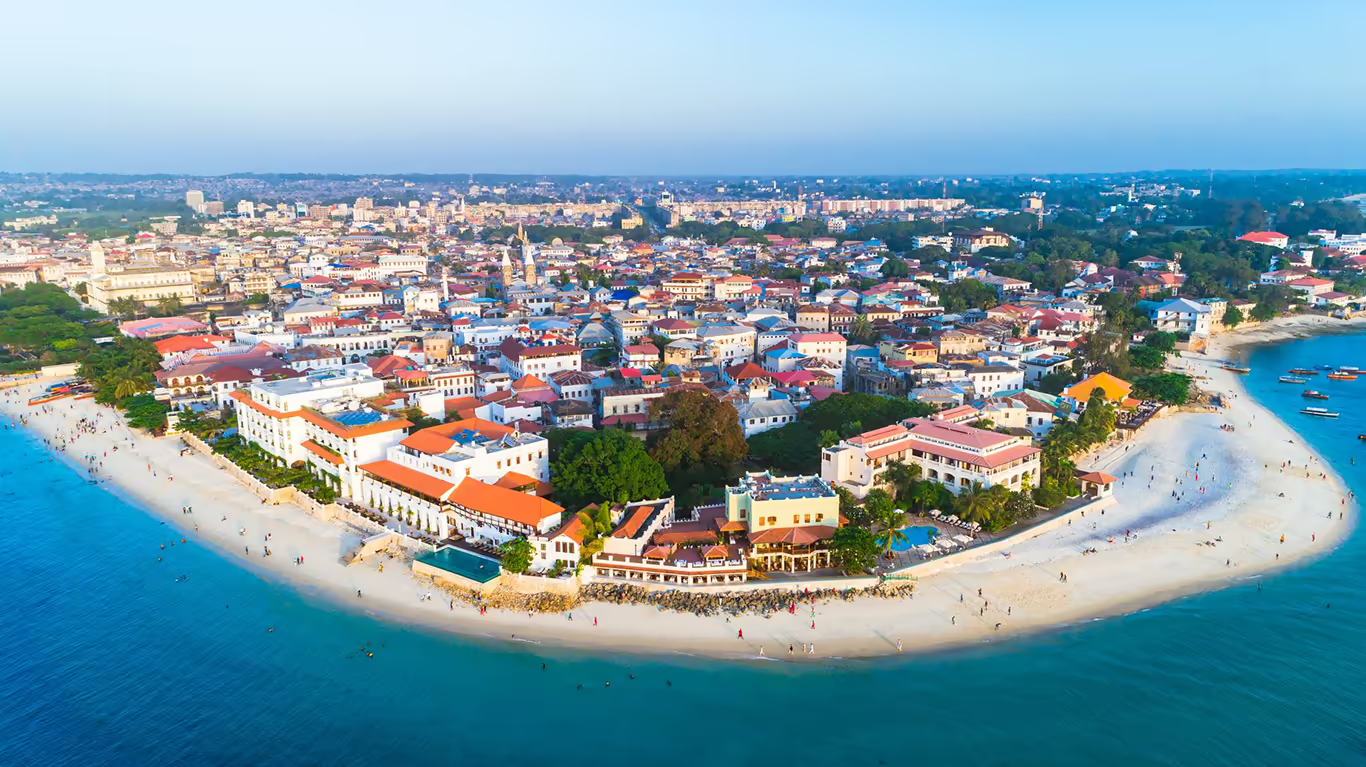
Zanzibar is a group of islands in the Indian Ocean, off the coast of East Africa, about 6 degrees south of the equator. The main island, Unguja, lies across a channel only about 36 km wide from mainland Tanzania, opposite the city of Dar es Salaam. Zanzibar is not an independent country. It is a semi-autonomous part of the United Republic of Tanzania, with its own president, government and parliament, while Tanzania handles passports, visas, currency, defence and foreign affairs. For a visitor, that means one Tanzanian visa covers both, the money is the Tanzanian shilling, and a few rules, such as the mandatory travel insurance, are Zanzibar's own. Our Zanzibar travel page brings together the beaches, tours and transfers on the island.
Checked on 2 November 2026 by Maria Majaaliwa Thomas.
Zanzibar quick facts
| Where | Indian Ocean, off the coast of Tanzania, East Africa. About 6°S, 39°E. |
|---|---|
| Political status | Semi-autonomous part of the United Republic of Tanzania since 26 April 1964 |
| Main islands | Unguja (often simply called Zanzibar Island) and Pemba, plus dozens of small islets |
| Capital | Zanzibar City, on the west coast of Unguja. Its old quarter is Stone Town. |
| Population | 1,889,773 at the 2022 census |
| Government | Revolutionary Government of Zanzibar, led by the President of Zanzibar, with an elected House of Representatives |
| Languages | Swahili (Kiswahili) is spoken by everyone. English is used in government, business and tourism. Arabic is also heard. |
| Religion | The great majority of Zanzibaris are Muslim, with small Christian and Hindu communities |
| Currency | Tanzanian shilling (TZS). US dollars are widely accepted for hotels and tours. |
| Time zone | East Africa Time, UTC+3, all year. No daylight saving. |
| Phone code | +255 (the same as Tanzania) |
| Main airport | Abeid Amani Karume International Airport (ZNZ), near Stone Town |
| UNESCO site | Stone Town of Zanzibar, World Heritage Site since 2000 |
| Visitors | 917,167 international arrivals in 2025, a record, according to the Office of the Chief Government Statistician |
Where Zanzibar is on the map
Picture the east coast of Africa. Follow it south from Kenya into Tanzania and stop at Dar es Salaam, Tanzania's largest city. Zanzibar's main island sits just off that coast, a little to the north, with the Zanzibar Channel between them. Pemba is about 50 km further north, roughly level with the Kenya and Tanzania border. Further out is nothing but the Indian Ocean until you reach the Seychelles, more than 1,500 km to the east.
Some distances that help when you plan:
| From | To Zanzibar (Unguja) |
|---|---|
| Dar es Salaam | About 2 hours by fast ferry to the Stone Town port, or about 20 minutes by air |
| Kilimanjaro or Arusha (for northern safaris) | About 1 to 1.5 hours by air |
| Nairobi, Kenya | About 1.5 hours by air |
| Pemba Island | About 30 minutes by air, or a longer ferry crossing |
| Johannesburg | About 3.5 to 4 hours by air |
| Doha, Dubai or Muscat | About 5 to 6 hours by air |
| Western Europe (Amsterdam, Frankfurt, Paris, Rome, London) | About 9 to 10 hours by direct flight, longer with a connection |
Flight times are typical scheduled times and change with the route and airline. Our guide to arriving at Zanzibar airport lists the airlines that currently fly in.
Is Zanzibar a country?
Not today. Zanzibar was an independent state for a short time, and it keeps more self-government than any other part of Tanzania, which is why the question comes up so often. Here is how it happened, in five dates.
- 19th century: Zanzibar was ruled by the Omani sultans, who moved their capital here from Muscat. Stone Town grew rich on trade in cloves, ivory and, shamefully, enslaved people. The island became a British protectorate in 1890.
- 10 December 1963: the British protectorate ended and Zanzibar became independent as a constitutional monarchy under the sultan.
- 12 January 1964: the Zanzibar Revolution overthrew the sultan. The day is still a public holiday, Revolution Day.
- 26 April 1964: Zanzibar joined with Tanganyika on the mainland to form a union, renamed the United Republic of Tanzania later that year. The name itself joins the two: TANganyika and ZANzibar. Union Day is a public holiday too.
- Today: Zanzibar has its own president, its own House of Representatives in Zanzibar City, its own flag and its own ministries for areas like health, tourism and local transport. The Union government in Dodoma is responsible for foreign affairs, defence, immigration, citizenship and the currency.
What Zanzibar's status means for your trip
| Topic | Same as mainland Tanzania? | What to know |
|---|---|---|
| Visa | Yes | One Tanzanian visa from visa.immigration.go.tz covers the mainland and Zanzibar. You may still be asked to show your passport when you arrive in Zanzibar from Dar es Salaam. |
| Currency | Yes | Tanzanian shilling, the same notes and coins everywhere |
| Mandatory travel insurance | Partly | Zanzibar and the mainland each run a scheme at USD 44 per adult, but one policy covers the whole trip. See our guide to the mandatory travel insurance. |
| Health advisories | No | Zanzibar has its own Ministry of Health and its own health declaration portal, so its rules can differ from the mainland's |
| Tourism licensing | No | Tour operators and guides on the islands are licensed by the Zanzibar Commission for Tourism |
| Public holidays | Mostly | Zanzibar adds Revolution Day on 12 January, and Islamic holidays such as Eid are marked strongly on the islands |
Zanzibar is more than one island
Unguja: the island most people mean
Unguja is about 85 km long and up to 39 km wide. The airport, Stone Town, the ferry port and almost all the beach hotels are here. When people say they are going to Zanzibar, this is where they are going.
Pemba: the green island to the north
Pemba is smaller, hillier and far quieter, about 67 km long and 23 km wide. It is the heart of Zanzibar's clove farming and has some of the best diving in East Africa, with steep reef walls and few other boats. It suits travellers who want a slower few days after Unguja. Read more on our Pemba Island page.
The small islands you are likely to visit
- Prison Island (Changuu), a short boat ride from Stone Town, home to giant Aldabra tortoises.
- Mnemba Atoll, off the north-east coast, the best known snorkelling spot on the island.
- Chumbe Island, a protected coral reef and forest off the west coast.
- Nakupenda sandbank, a strip of white sand near Stone Town that appears and shrinks with the tide.
- Kwale and the islands of Menai Bay in the south-west, visited on the Safari Blue boat trip.
One common mix-up: Mafia Island, further south, is part of the same chain of islands geographically, but it is governed by mainland Tanzania, not by Zanzibar.
The main areas of Unguja, and how far they are from the airport
The island divides neatly into four coasts, and each feels different. These drive times come from our own transfer routes and assume normal daytime traffic.
| Area | Coast | From the airport | Good to know |
|---|---|---|---|
| Stone Town | West | About 15 min, 8 km | The old town, markets, history, food, sunsets over the sea |
| Kiwengwa | East | About 50 min, 45 km | Long beach with many large resorts, strong tides |
| Paje | South-east | About 55 min, 50 km | Wide lagoon, the island's kitesurfing centre |
| Bwejuu | South-east | About 55 min, 53 km | Quiet beach between Paje and Michamvi |
| Matemwe | North-east | About 60 min, 52 km | Fishing villages, closest beach to Mnemba Atoll |
| Jambiani | South-east | About 60 min, 55 km | Village life and seaweed farming along the shore |
| Kendwa | North-west | About 70 min, 60 km | Swimming at most states of the tide, sunsets |
| Kizimkazi | South | About 70 min, 62 km | Dolphin trips, one of the oldest mosques in East Africa |
| Michamvi | South-east | About 70 min, 65 km | Peninsula near The Rock restaurant, calm bay on the west side |
| Nungwi | North | About 75 min, 64 km | Northern tip, lively, dhow building, swimming at most tides |
The four coasts in plain words
- North (Nungwi and Kendwa): the tide goes out less here than on the east coast, so you can swim for more of the day. Busier, with more restaurants and nightlife.
- East (Kiwengwa, Pongwe, Matemwe): long white beaches facing a coral reef. At low tide the sea pulls back a long way and you walk out over sand and rock pools. Most of the big resorts are here.
- South-east (Paje, Bwejuu, Jambiani, Michamvi): a wide shallow lagoon, steady trade winds, kitesurfing and seaweed farms. Very tidal.
- South and west (Kizimkazi, Fumba, Stone Town): dolphins, the Menai Bay islands, sunset dhow cruises and the city.
Choosing between them depends on what you want each day. Tides matter more than most visitors expect, so keep that in mind when you pick a beach.
How to get to Zanzibar
- Direct international flights land at ZNZ from Europe, the Gulf and other African hubs. Qatar Airways, Turkish Airlines, Ethiopian Airlines, flydubai, Oman Air, KLM, Air France, Condor, Edelweiss and Neos are among the airlines that fly here, with more charter flights in the European winter.
- Via Dar es Salaam: fly into Dar es Salaam, then take a 20 minute domestic flight or the fast ferry, which takes about 2 hours to the Stone Town port.
- After a safari: domestic airlines fly from Kilimanjaro, Arusha and many park airstrips straight to Zanzibar, which is why a safari and a beach week fit together so well.
Wherever you arrive, we can meet you. We run fixed price transfers from the airport and the ferry port to every part of the island.
A little background: why Zanzibar is called the Spice Island
The name Zanzibar comes from Arabic and Persian words usually translated as "coast of the Zanj", a name medieval geographers gave the East African coast. For more than a thousand years, the monsoon winds carried traders here from Arabia, Persia and India and back again, and that mix of peoples created the Swahili culture and language you meet today.
In the 19th century the Omani sultans planted cloves on a large scale, and Zanzibar and Pemba became the world's main source of cloves. That is the origin of the "Spice Island" nickname. Cloves are still grown, especially on Pemba, alongside nutmeg, cinnamon, black pepper, vanilla and lemongrass, which you can see and taste on a spice farm tour.
Today tourism is the islands' largest earner. Visitor numbers have grown from 19,000 a year in the mid 1980s to more than 900,000 in 2025. In recent monthly figures, Italy and Germany have been the largest source markets.
Frequently asked questions
Is Zanzibar part of Tanzania?
Yes. Zanzibar has been part of the United Republic of Tanzania since 26 April 1964. It keeps its own president, parliament and government for internal matters.
Is Zanzibar in Kenya?
No. Zanzibar belongs to Tanzania. Kenya is to the north, and many travellers connect through Nairobi, which may be the source of the confusion.
Which continent is Zanzibar in?
Africa. The islands lie in the Indian Ocean, off the coast of East Africa.
Do I need a separate visa for Zanzibar?
No. A Tanzanian visa covers both the mainland and Zanzibar. You do need Zanzibar's mandatory travel insurance, unless you entered Tanzania on the mainland first and bought the mainland policy.
What is the capital of Zanzibar?
Zanzibar City, on the west coast of Unguja. Stone Town is its historic centre and a UNESCO World Heritage Site.
What language is spoken in Zanzibar?
Swahili. English is widely spoken in hotels, restaurants and by guides. A few Swahili words, like "jambo" (hello) and "asante" (thank you), are always appreciated.
What is the time difference between Zanzibar and the UK or Europe?
Zanzibar is on UTC+3 all year. That is 3 hours ahead of the UK in winter and 2 hours ahead in summer, and 2 hours ahead of Central Europe in winter and 1 hour ahead in summer.
How many people live in Zanzibar?
1,889,773 people, according to the 2022 Tanzania census. About 893,000 of them live in the Mjini Magharibi region, which includes Zanzibar City, and about 543,000 on Pemba.
Sources
- 2022 Population and Housing Census, National Bureau of Statistics and the Office of the Chief Government Statistician, Zanzibar: nbs.go.tz
- 2025 tourist arrivals (917,167): Office of the Chief Government Statistician release, reported by The Citizen
- Stone Town of Zanzibar, UNESCO World Heritage List: whc.unesco.org
- Tanzania e-visa (covers the mainland and Zanzibar): visa.immigration.go.tz
- Island sizes, dates and government structure: Zanzibar on Wikipedia, checked against the sources above
- Drive times: V Tours and Safaris transfer routes, 2 November 2026
Planning your first trip? Tell us your dates on WhatsApp or through our trip planner. I was born here, and helping people find their way around this island is what I do every day.

Maria Majaaliwa Thomas
Founder & Owner
Maria Majaaliwa Thomas is the Founder and Owner of V Tours & Safaris, a Zanzibar-based tour operator. With over a decade of experience in aviation and tourism, Maria specializes in Zanzibar holidays, Tanzania safaris, and East African travel. Through her articles, she shares local insights, expert travel tips, and destination guides to help travelers plan unforgettable African adventures.